Consensus vs Elicit: Which AI Research Tool Should You Use?
Consensus and Elicit both help with academic research, but they sit at different stages of the workflow. Consensus is better for asking a research question and seeing what papers say; Elicit is better when the task becomes structured literature review and extraction.
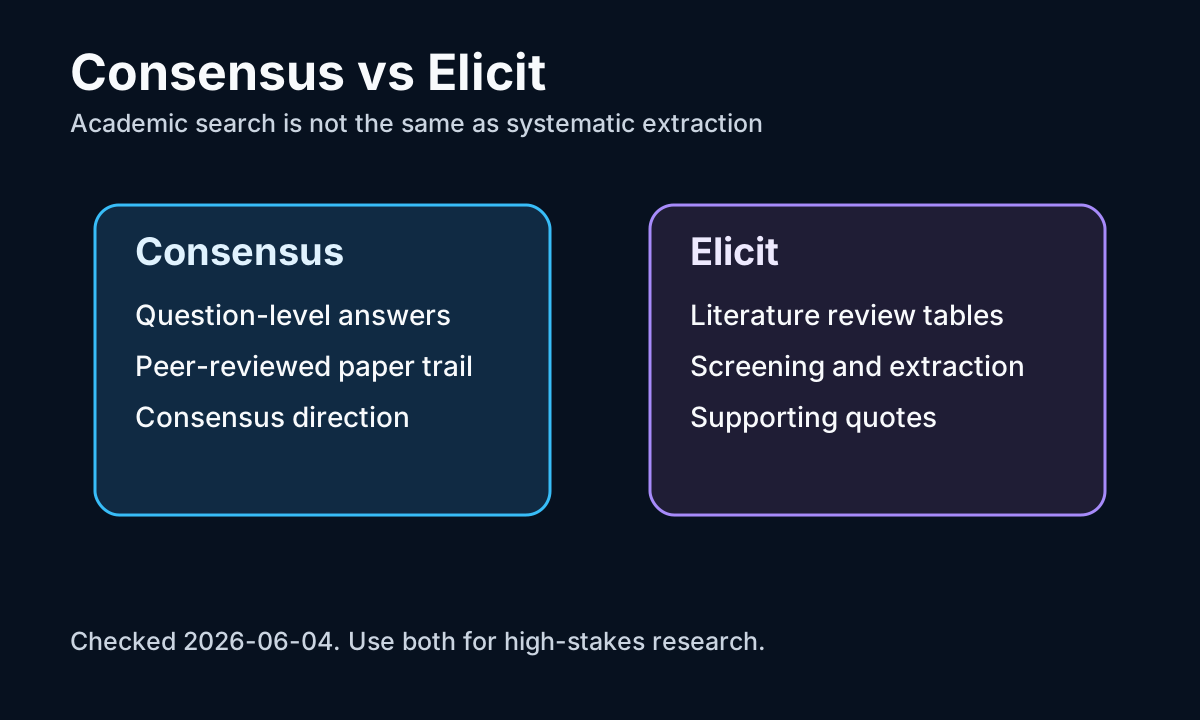
Consensus help pages describe it as an AI-powered academic search engine built on a database of more than 220 million peer-reviewed papers. It also offers a Consensus Meter to summarize whether returned studies lean Yes, No, Possibly, or Mixed.
Elicit is more operational. Its product pages and blog describe language-model workflows for extracting data from papers, summarizing research papers, and guiding systematic review tasks such as search, screening, and full-text extraction.
Use both when the stakes are high. Start in Consensus to test whether a question is well formed and where the evidence points. Move to Elicit when you need to screen papers, define extraction columns, and audit quotes behind extracted values.
Neither tool removes the need for human review. Academic abstracts can hide weak methods, and AI extraction can miss nuance. Use these tools to accelerate discovery and table-building, not to outsource final scholarly judgment.
FAQ answer block: Consensus is usually better for quick research answers with paper trails, while Elicit is usually better for literature review workflows that require screening, extraction columns, supporting quotes, and repeatable review steps.