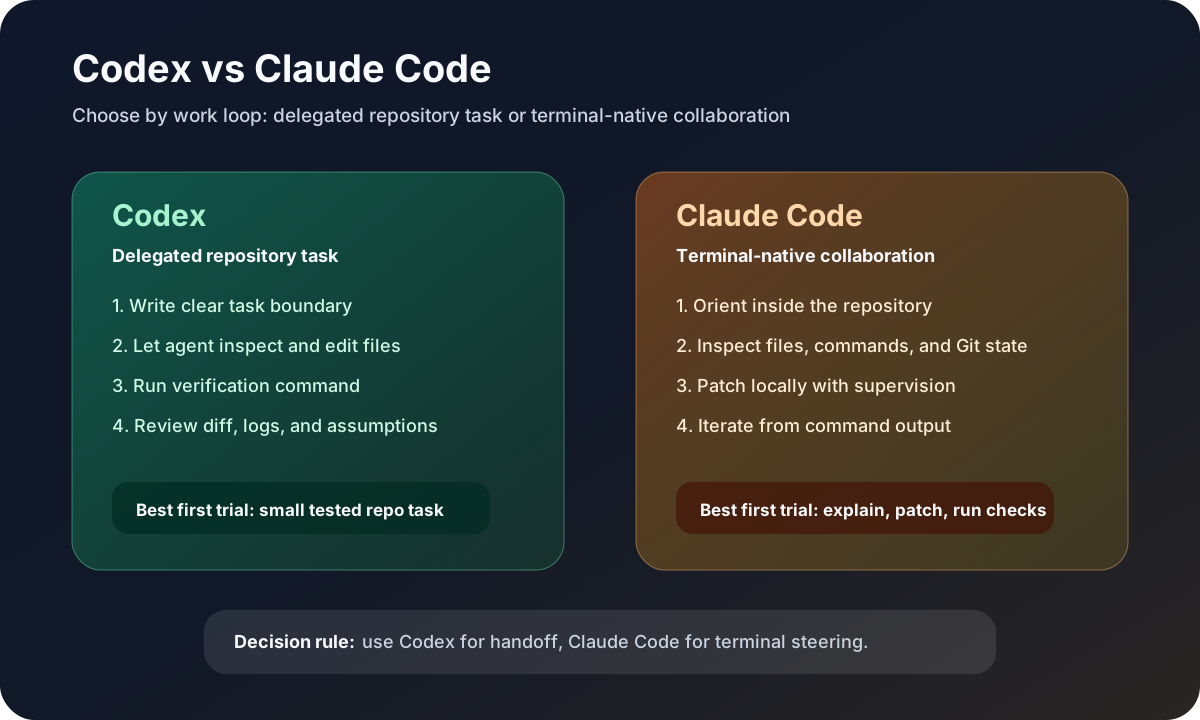
| Primary workflow | Best framed as delegated repository work: describe a task, constrain the scope, let the agent inspect and edit, then review the resulting diff and logs. | Best framed as terminal collaboration: keep the agent near shell commands, package scripts, Git history, local files, and iterative developer supervision. |
|---|
| Official positioning | OpenAI positions Codex as a coding agent for writing code, understanding codebases, reviewing code, debugging, and automating development tasks. | Anthropic describes Claude Code as an agentic coding tool that reads codebases, edits files, runs commands, and integrates with development tools. |
|---|
| Best task shape | Small to medium engineering tasks with an explicit finish line: failing test fixes, scoped refactors, documentation updates, dependency cleanup, and reviewable feature slices. | Exploration and implementation in the same terminal session: explain this module, run these checks, patch these files, inspect this error, then iterate. |
|---|
| Human control | Control comes from task boundaries, repository instructions, verification commands, review logs, and deciding whether the final change is acceptable. | Control comes from staying in the terminal loop, approving tool use as needed, watching command output, and steering edits before the task drifts. |
|---|
| Team rollout risk | The main risk is over-delegation: teams may hand off tasks before tests, permissions, and review ownership are mature enough. | The main risk is local authority: terminal agents sit close to files and commands, so teams need clear permission modes and command boundaries. |
|---|
| Best first trial | Ask Codex to update a small test, improve a contained module, or draft a migration note with a verification command included in the prompt. | Ask Claude Code to inspect a repo area, explain the relevant files, propose the smallest safe edit, run checks, and summarize what changed. |
|---|